Melanistic Genetics
Black Panther vs Jaguar: They Are the Same Animal
In the Americas, a "black panther" is simply a melanistic jaguar. Not a different species, not a hybrid, not a separate subspecies. It is a jaguar with a genetic variant that produces excess dark pigment. This page explains the genetics, how common they are, and how to spot their hidden rosettes.
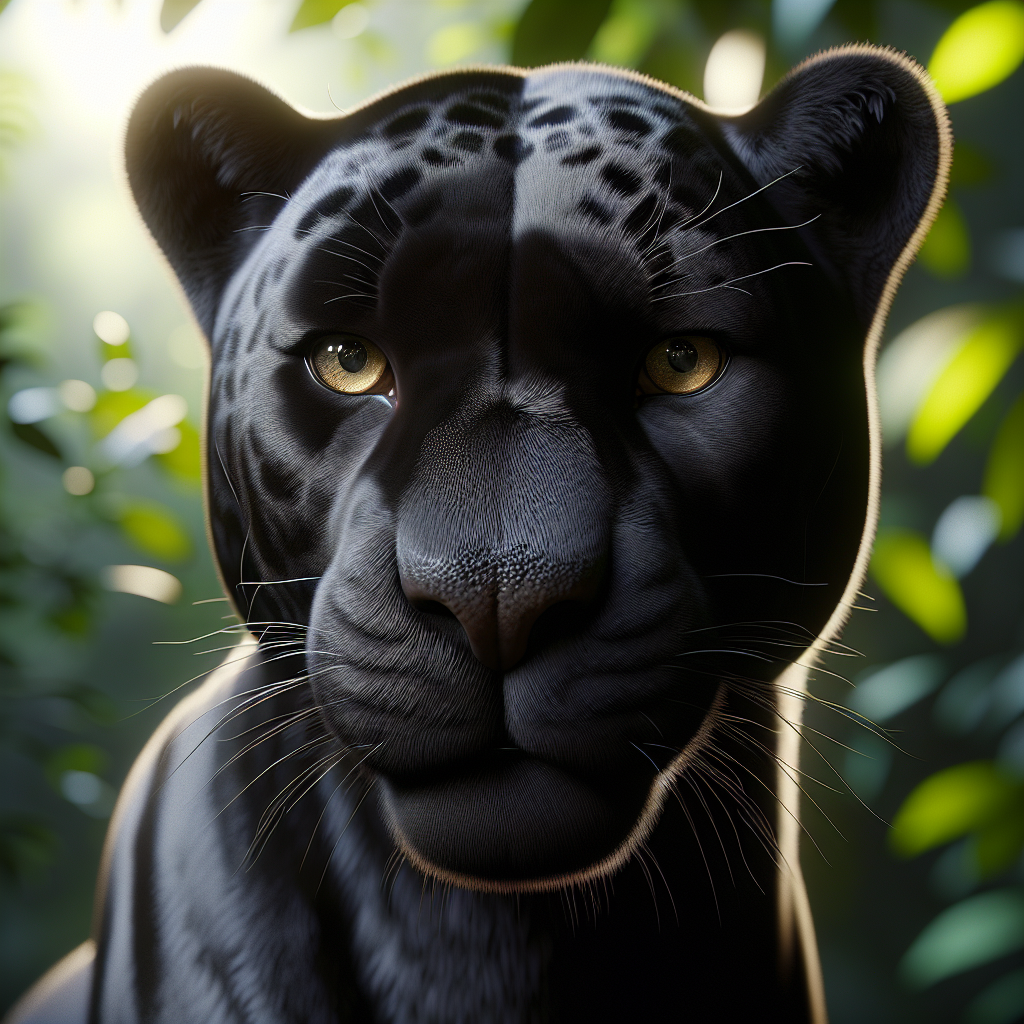
A melanistic jaguar in dappled sunlight. Look closely and you can see the rosette pattern hidden beneath the dark fur.
The Genetics of Melanism
Melanism in jaguars is controlled by the MC1R (melanocortin 1 receptor) gene. A dominant allele of this gene causes the overproduction of eumelanin, the dark pigment in fur. Because the allele is dominant, a jaguar only needs one copy to appear melanistic.
This is different from melanism in leopards, where the trait is recessive and controlled by the Agouti signaling protein (ASIP) gene. A leopard needs two copies of the melanistic allele (one from each parent) to appear black. This fundamental genetic difference is one reason melanism has different frequencies in the two species.
The MC1R gene does not affect anything except coat color. Melanistic jaguars have the same skeletal structure, the same bite force (approximately 1,500 PSI), the same hunting behavior, and the same lifespan as spotted jaguars. They are not larger, stronger, or more aggressive. The only difference is pigment.
Melanistic Inheritance Patterns in Jaguars
| Parent 1 | Parent 2 | Melanistic Offspring | Spotted Offspring |
|---|---|---|---|
| Melanistic (MM) | Melanistic (MM) | 100% | 0% |
| Melanistic (Mm) | Melanistic (Mm) | 75% | 25% |
| Melanistic (Mm) | Spotted (mm) | 50% | 50% |
| Spotted (mm) | Spotted (mm) | 0% | 100% |
M = dominant melanistic allele, m = recessive normal allele. Actual ratios in wild populations are influenced by natural selection and gene flow.
How Common Are Black Jaguars?
~6%
Overall wild population
10-11%
Dense Central American forests
1-2%
Open grasslands (Pantanal)
The variation in frequency by habitat supports the adaptive melanism hypothesis: darker coloring provides a selective advantage in dense, dark forest environments where it aids in camouflage, while it may be a disadvantage in open habitats where spotted patterns break up the body outline more effectively.
Camera trap studies in Belize, Guatemala, and southern Mexico have documented melanistic jaguars at higher rates than the population average. The Cockscomb Basin Wildlife Sanctuary in Belize, the world's first jaguar preserve, has recorded melanistic individuals in its long-term monitoring program.
Seeing the Hidden Rosettes
One of the most striking features of melanistic jaguars is that their rosettes do not disappear. The spots are still present in the fur structure but are hidden by the excess melanin. Under the right conditions, the pattern emerges.
How to see the rosettes:
- 1.Direct sunlight: When sunlight hits the coat at an angle, the slightly different density of melanin in the spots versus the background makes the rosettes visible as a darker-on-dark pattern.
- 2.Infrared photography: IR cameras reveal the rosettes clearly because the melanin concentration differs between spots and background, creating different heat absorption patterns.
- 3.Flash photography: Camera flash at close range often reveals the rosettes in captive melanistic jaguars. The pattern is identical to what you would see on a normally colored jaguar.
- 4.Wet fur: When a melanistic jaguar emerges from water (and jaguars love water), the wet fur sometimes reveals the underlying pattern more clearly.
The rosette pattern on a jaguar is diagnostic. Jaguar rosettes are large, irregularly shaped, and contain one or more small central spots within each ring. This "spot within a spot" pattern is unique to jaguars and is not found in leopards, which have smaller rosettes without central dots. Even on a melanistic coat, this difference can be used to identify the species.