Species Comparison
Florida Panther vs Jaguar: Two Completely Different Animals
Despite sharing the word "panther," the Florida panther and the jaguar are about as different as two cats can be. One is a cougar that purrs. The other is a true big cat that roars. They belong to different genera, live on different parts of the continent, and are separated by millions of years of evolution.
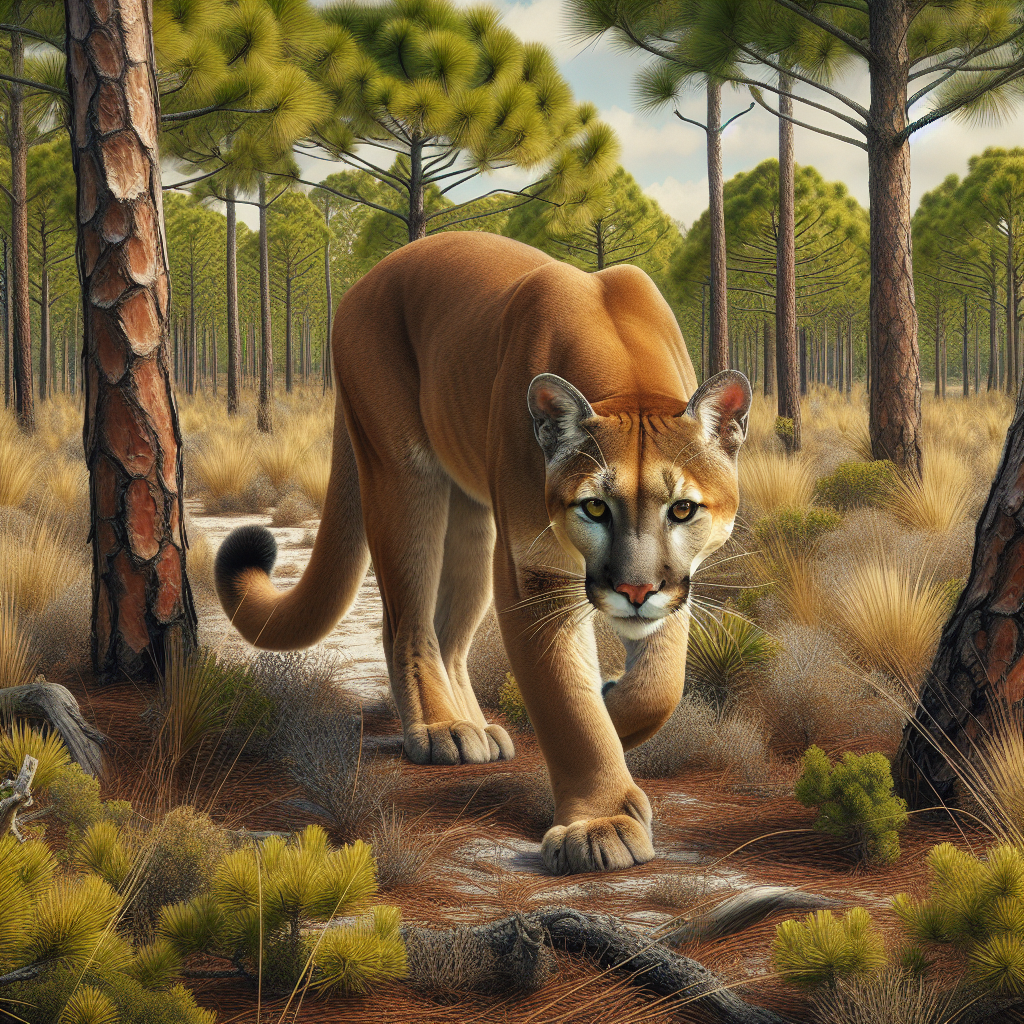
A Florida panther (Puma concolor coryi) in its native pine scrub habitat. Note the tawny coat with no spots or rosettes.
Side-by-Side Comparison
| Feature | Florida Panther | Jaguar |
|---|---|---|
| Scientific name | Puma concolor coryi | Panthera onca |
| Common names | Cougar, mountain lion, puma | Jaguar, tigre (Spanish) |
| Genus | Puma | Panthera |
| Subfamily | Felinae | Pantherinae |
| Weight (male) | 45 to 72 kg (100 to 160 lbs) | 56 to 96 kg (123 to 212 lbs) |
| Body length | 1.8 to 2.2 m (nose to tail) | 1.7 to 2.4 m (nose to tail) |
| Coat color | Tawny / tan with lighter belly | Golden with black rosettes (or melanistic) |
| Rosettes | None (adults) | Yes, large with central spots |
| Can roar? | No (purrs, chirps, screams) | Yes (has flexible hyoid bone) |
| Bite force | ~350 PSI | ~1,500 PSI |
| Preferred habitat | Swamps, forests, palmetto | Tropical forests, wetlands |
| Range | Southern Florida only | Mexico to Argentina |
| Diet | Deer, wild hogs, rabbits | Capybara, caiman, deer, peccary |
| Swimming | Avoids water when possible | Excellent swimmer, hunts in water |
| Conservation status | Endangered (US ESA) | Near Threatened (IUCN) |
| Wild population | 120 to 230 | ~173,000 (estimate) |
Why the Florida Panther Is Not a True Panther
The Florida panther belongs to the genus Puma, which is part of the subfamily Felinae. This is the same subfamily that includes domestic cats, cheetahs, and servals. Jaguars belong to the subfamily Pantherinae, which includes lions, tigers, and leopards.
The split between Felinae and Pantherinae occurred roughly 10 to 11 million years ago. This means a Florida panther is more closely related to your house cat than it is to a jaguar. The key anatomical difference is the hyoid bone in the throat: Pantherinae have a flexible hyoid that enables roaring, while Felinae have a rigid hyoid that enables purring but prevents roaring.
Florida panthers also differ from jaguars in hunting style. Jaguars are ambush predators that frequently kill by biting through the skull of their prey with their immensely powerful jaws. Florida panthers, like all cougars, typically pursue prey with a short sprint and kill with a bite to the neck or suffocation. Jaguars regularly hunt caiman, large reptiles, and will even attack anacondas. Florida panthers focus primarily on white-tailed deer and wild hogs.
Conservation: A Tale of Two Recoveries
Florida Panther
- Population low point: ~20 adults (early 1990s)
- 1995 genetic rescue: 8 Texas cougar females introduced
- Current estimate: 120 to 230 individuals
- Primary threats: vehicle strikes, habitat loss
- Protected habitat: Big Cypress National Preserve, Florida Panther National Wildlife Refuge
- Florida state animal since 1982
Jaguar
- Global population estimate: ~173,000
- IUCN status: Near Threatened
- Range has shrunk ~50% from historical extent
- Primary threats: deforestation, rancher conflict, poaching
- Key stronghold: Amazon Basin (~57,000 jaguars)
- Jaguar Corridor Initiative connects fragmented habitat
Both species face significant conservation challenges, but the scale is vastly different. The Florida panther exists in a tiny fragment of its historical range with extreme vulnerability to stochastic events. A single major hurricane or disease outbreak could devastate the population. Jaguars have much larger numbers but face relentless habitat loss, particularly in the Amazon where deforestation rates have accelerated.